

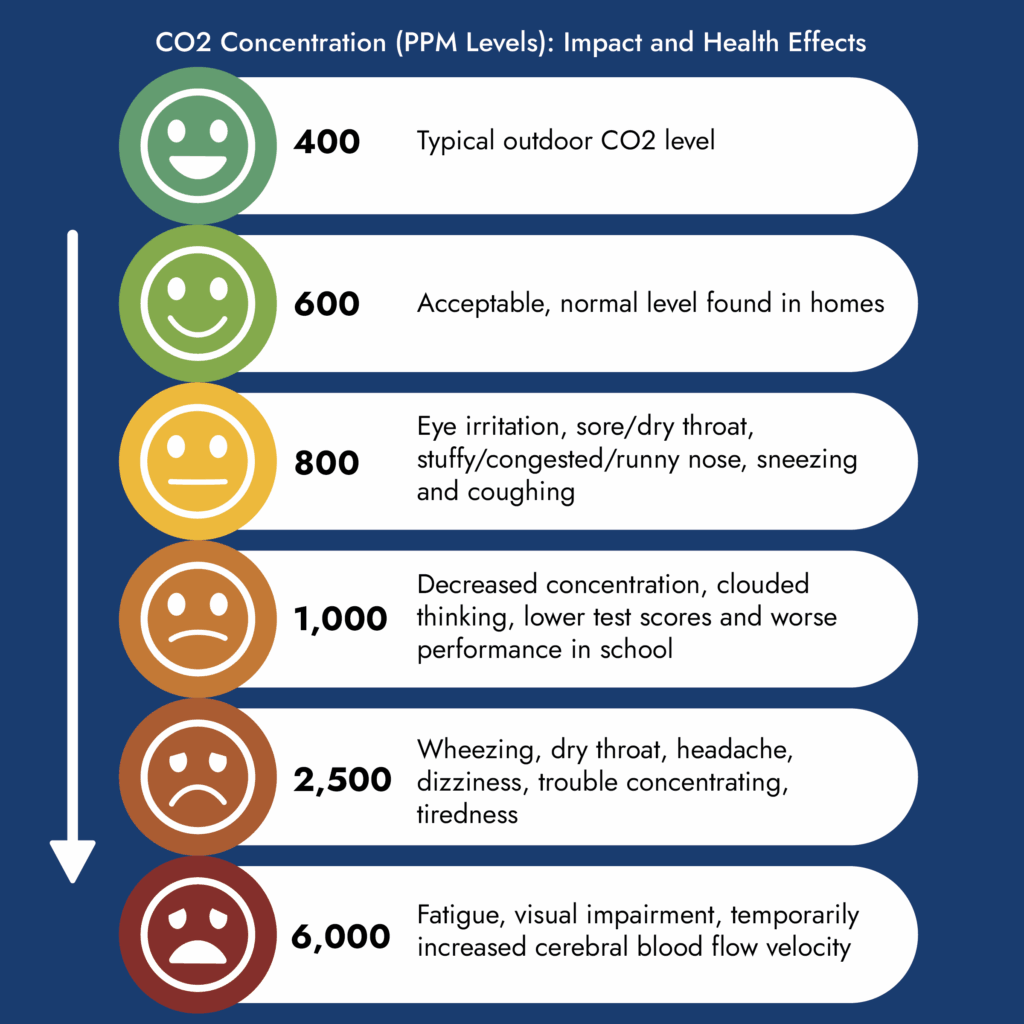
Indoor air quality is essential to keep spaces comfortable, safe, and operationally efficient. By monitoring temperature, relative humidity, and CO2, facility teams can get a quick look into the health of their buildings. In schools, classrooms are a higher risk area for poor air quality due to continued occupancy throughout the day. High CO2 levels can lead to headaches, tiredness, difficulty concentrating, and the spread of diseases.
- CO2 is the most important factor in indoor air quality. Keeping indoor levels under 800 ppm ensures the best occupant health and comfortability. If CO2 is too high, bring in fresh outside air through your HVAC system, or if possible, open windows or door to the room.
- Temperature plays a common role in indoor comfort as being too hot or cold can easily affect focus. At the same time, poorly managed temperature setpoints can hurt long-term HVAC performance and lead to increased energy use.
- Keeping Relative Humidity between 30-60% should maintain a safe, comfortable environment. RH can be managed through ventilation, with the use of fans and dehumidifiers to prevent mold growth when needed.
By monitoring these points, facility and operations teams can maintain their indoor air quality to create comfortable spaces. Whether it’s a school, retail store, or office, a healthy air ensures the best environment for occupants and building equipment longevity.

No responses yet